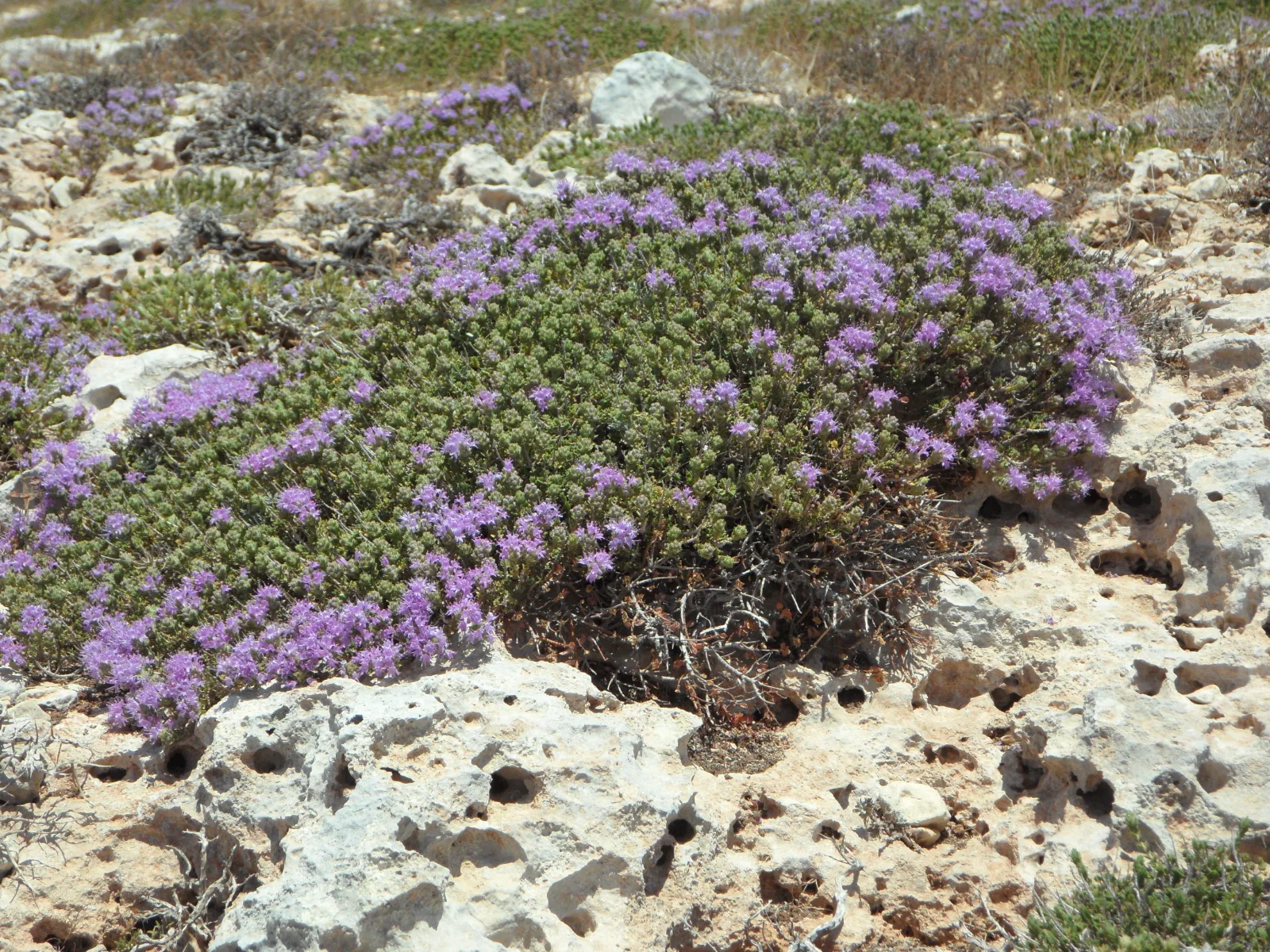
The scrubland, a wild garden at the gates of Collias When you stay in Collias, in the heart of the Gardon Gorge, it only takes a few steps outside the village to find yourself immersed in a landscape as beautiful as it is bewitching: the scrubland. This typically Mediterranean plant environment, which develops on the limestone, dry and sunny soils of the south of France, is much more than just a postcard setting.
It is a veritable pantry and open-air pharmacy, which locals have been exploring and using for millennia. At Chambres d 'Elise, we are fortunate to be surrounded by this exceptional landscape. Classified in the UNESCO Gardon Gorge Biosphere Reserve, the hills overlooking Collias are home to remarkable biodiversity.
And it is to share this wealth that I propose, on request, guided botanical walks around the village. Thyme and rosemary: emblems of our hills It is impossible to talk about garrigue without mentioning its two queen plants: thyme (Thymus vulgaris) and rosemary (Rosmarinus officinalis). We recognize them even before we see them, as their fragrance permeates the air as soon as the sun heats the limestone.
Common thyme, with its small pink flowers and compact port, is a model for adapting to extreme conditions. It reduces the surface area of its leaves to limit evaporation and resists both summer drought and winter mistral. In cooking, it is essential in garnished bouquets and marinades.
On the health side, it is known for its antiseptic, antiviral and expectorant properties — a thyme tea is a valuable traditional remedy for winter ailments. Rosemary, on the other hand, is a small shrub that can reach two meters in height. Its thin evergreen leaves, dark green above and grayish below, curl up on a protective down that traps moisture.
Its purple, blue or white flowers attract bees — rosemary honey is one of the finest in Provence. In herbal medicine, rosemary is appreciated for its digestive, stimulating and antioxidant properties. Unknown treasures at your fingertips Beyond these two celebrities, the scrubland around Collias is home to many other fascinating plants that can be discovered along the way.
Juniper (Juniperus oxycedrus), with its blue-black berries, was once distilled to produce grapefruit oil, used in veterinary medicine and traditional dermatology. Lentic pistachio (Pistacia lentiscus), a shrub with evergreen and lustrous foliage, produces an aromatic resin known since ancient times as mastic.
Cotton cistus (Cistus albidus), recognizable by its large pink-mauve flowers crumpled like tissue paper, secretes an odorous resin called labdanum, used in perfumery since ancient Egypt.
And then there are the plants that I grow or pick to make my oily macerates, available at the Chambers of Elise: St. John's wort, whose red oil soothes burns and muscle pain; immortal helichrysum, nicknamed "garrigue arnica" for its anti-inflammatory properties; and calendula, with healing and softening properties.
A walk to learn how to look differently During the botanical walks that I propose from the Chambres d 'Elise, we take the paths that meander between the scrubland and the banks of the Gardon. On an easy journey of about two kilometers, we take the time to observe, touch, smell — and sometimes taste — the plants around us.
Trained in aromatic and medicinal plants (BPREA), I share with you the keys to identify a dozen edible or medicinal species. You'll learn how to distinguish snake thyme from common thyme, recognize the wild savory that scents our hills, or spot young wild fennel shoots along the paths.
We also discuss the essential principles of responsible harvesting: how to harvest without damaging, what quantities to take, and what precautions to take to respect the biodiversity of this fragile environment. In spring, the scrubland is adorned with a thousand colors with the flowering of wild orchids, irises and cists. In summer, aromatics dominate — thyme, savory, oregano — and the air embalms with every step.
Autumn reveals juniper berries and strawberry fruits. Each season offers a different picture and new discoveries. Extending the dining experience What is special about our approach to Chambres d 'Elise is the link between the walk and the plate.
The plants we discover along the way are found in the kitchen I prepare for our guests: garrigue honey accompanies the hot goat, the herbs of Provence enhance the tian of vegetables from the garden, and wildflowers sometimes decorate a clafoutis with seasonal fruits. This connection between the landscape and the table is at the heart of the spirit of our home.
It is not just a question of visiting the scrubland, but of living it — of understanding this ancient link between men and their terroir, which makes all the charm of Uzège and Gard. Practical information Botanical walks are offered on request to the hosts of the Chambres d 'Elise. They last about 1h30 to 2h, on easy trails accessible to all. Remember to provide closed shoes, a hat and water.
To book your stay and walk, contact us directly by phone at +33 (0)7 67 82 84 00 or by email at chambres.elise@gmail.com.